- Over 450 species of birds
- 138 species of mammals
- 12500 species of insects
- 74 species of fish
- 20 reptiles
- 2823 species of high vascular plants
- 920 species of lichen
- 417 species of moss
- 520 species of fungus
- 728 species of algae
- 33 gobi desert
- over 20 peaks with eternal snow
- 4000 rivers
- 400 springs
- 16 large lakes and many small lakes
- 50 protected areas
- 700 monasteries and/or ruins of monasteries
- 21 aimags
- 73 monuments in Ulaanbaatar
- Many historical and cultural monuments
- Many everyday life situations
- Beautiful sunsets and sunrises
- Stars and moon
- Blue sky
- and more
Showing posts with label Waterland. Show all posts
Showing posts with label Waterland. Show all posts
Tuesday, November 21, 2006
Things to photograph in Mongolia

Saturday, November 18, 2006
Ramsar site lists of Mongolia
Hovd aimag
- Ayrag Nuur (48º53’N 093º25’E)
- Har Us Nuur National Park (47º58’N 092º50’E)
Bayan-Ulgii, Uvs aimag
- Lake Achit and its surrounding wetlands (49°40’N 090°35’E)
Uvs aimag
- Lake Uvs and its surrounding wetlands (50°20’N 092°45’E)
Dornod aimag
- Lake Buir and its surrounding wetlands (47°48’N 117°40’E)
- Mongol Daguur (49º42’N 115º06’E)
Sukhbaatar aimag
- Lake Ganga and its surrounding wetlands (45°15’N 114°00’E)
Khentii aimag
- Lakes in the Khurkh-Khuiten Valley (48°18’N 110°34’E)
Arkhangai aimag
- Ogii Nuur (47º46’N 102º46’E)
- Terhiyn Tsagaan Nuur (48º10’N 099º43’E)
Bayankhongor aimag
- Valley of Lakes (Boon Tsagaan Nuur, Taatsiin Tsagaan Nuur, Adgiin Tasgaan Nuur, Orog Nuur) (45º19’N 099º58’E)
Tuesday, November 7, 2006
Gurvansaikhan National Park


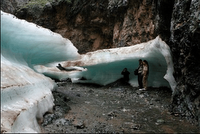
Gobi Gurvansaikhan park encompasses the series of ridges and valleys that make up the eastern end of the Gobi Altai mountains. Surrounded by low plains, the mountains rise to 2200-2600 meters, and include the Gurvan saikhan (three adjacent ridges named Zuun (East), Dund (Middle), and Baruun (West) saikhan), Zoolon, Sevrei, Gilbent, and Nemegt ridges. Some of the peaks are volcanic in origin.

The park, which extends for more than 380 kilometers from east to west, lies at the northern edge of the Gobi desert but includes desert steppe and steppe at higher elevations. The park's landscape is extremely varied, with rocky and sandy desert plains, precipitous cliffs and ravines, salt pans, and oases. Gurvansaikhan includes the highest diversity of plant life in the Gobi Altai, with over 620 species of flowering plants. Most are characteristic of Central Asian deserts, including 38 endemic species. During years with adequate precipitation, desert plants produce vibrant summer displays of desert flowers.
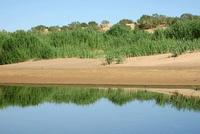
Fifty-two species of mammals are found here, including eight species listed in the Mongolian Red Book as endangered. Small herds of wild ass and black-tailed and Mongolian gazelle roam the desert valleys and desert steppe, while the mountains provide suitable habitat for threatened and endangered animals such as argali, Siberian ibex, and snow leopard. Long-eared hedgehogs and dwarf hamsters inhabit sandy areas. Over 240 bird species occur in the area, including 34 resident species, 99 breeding species, and 70 migrants.
Local herders seasonally graze livestock in parts of the park, which features some popular tourist destinations, including the Valley of Yol, a picturesque gorge, and the Singing Sands, a spectacular sea of sand dunes bordered by red sandstone formations, an oasis, and a saxaul forest. The Nemegt, Khermiin Tsav, Naran daats, and Bayanzag mountains, the sites of numerous important dinosaur fossil discoveries, also lie within the park.
Friday, November 3, 2006
Sum huh burd
Sum huh burd is situated on the territory of Adaatsag soum in Dundgovi aimag.
There is a monastry, build by Mongolians on the small island of lake Burd. It is said that khutagt Danzanravjaa put his famous play "Saran khuhhuu" in this monastry.
Swan, duck and Partridge are common on the lake. South of the lake "Burd" is the spring Uudiin bulag, famous for its water's curative properties.
GPS coordinate is 46°23'36.13"N, 105°35'24.01"E
Subscribe to:
Posts (Atom)


